Geopolitical Competition in the South Pacific: Strengthening Sovereignty Through Regional Security CooperationExecutive Summary
- ernestalaelua
- 4 days ago
- 9 min read


Executive Summary
The South Pacific has become one of the most strategically contested regions in the Indo-Pacific. Increasing engagement by China, the United States, Australia, New Zealand, and other external actors has transformed the geopolitical landscape of Pacific Island countries (PICs). While this competition has generated substantial opportunities through development assistance, infrastructure investment, and security cooperation, it has also created concerns regarding sovereignty, strategic dependence, and regional stability.
China's growing diplomatic, economic, and security presence has challenged the traditional influence of Australia, New Zealand, and the United States. Beijing has expanded its engagement through infrastructure projects, development financing, trade partnerships, and security agreements, most notably the 2022 Solomon Islands–China Security Agreement. In response, traditional partners have increased diplomatic outreach, development assistance, and defense cooperation throughout the Pacific. Consequently, Pacific Island countries increasingly find themselves at the center of broader Indo-Pacific strategic competition.
Despite growing geopolitical tensions, Pacific leaders consistently emphasize that the region's greatest challenges are climate change, sustainable development, economic resilience, and human security rather than great-power rivalry. Through initiatives such as the 2050 Strategy for the Blue Pacific Continent, Pacific governments have advocated for a Pacific-led approach that prioritizes sovereignty, regional unity, and collective decision-making (Pacific Islands Forum Secretariat [PIFS], 2022).
This policy brief argues that Pacific Island countries should pursue a dual-track strategy. First, governments should strengthen Pacific-led governance mechanisms through the Pacific Islands Forum to improve oversight of foreign security agreements and strategic infrastructure investments. Second, Pacific states should expand collective maritime security cooperation with trusted partners to address transnational threats while maintaining regional ownership of security initiatives. Together, these policies would enable Pacific nations to benefit from external engagement while protecting sovereignty and preserving regional stability.
Background
The South Pacific occupies a strategically significant position connecting Asia, Oceania, and the Americas. Although geographically remote from major global centers, the region encompasses vast maritime zones, critical sea lines of communication, abundant fisheries resources, and strategic access routes throughout the Pacific Ocean. Historically, the region has been influenced primarily by Australia, New Zealand, and the United States, which have maintained longstanding political, economic, and security relationships with Pacific Island countries (Thakur, 1993).
During the Cold War, Pacific security was largely viewed through the lens of strategic denial and alliance politics. Following the collapse of the Soviet Union, attention shifted toward development, governance, environmental challenges, and regional cooperation (Bilney, 1994). However, the rise of China as a global power has once again elevated the strategic importance of the Pacific Islands.
Over the past two decades, China has dramatically expanded its engagement throughout the Pacific. Beijing has become a major trade partner, investor, and development financier for many Pacific Island countries. Chinese-funded projects include roads, ports, government buildings, telecommunications infrastructure, and public facilities. China has also increased diplomatic outreach through high-level visits, educational exchanges, police training programs, and security cooperation agreements (U.S.-China Economic and Security Review Commission [USCC], 2025).
According to the USCC (2025), China views the Pacific Islands as strategically important for projecting influence beyond the Second Island Chain, expanding access throughout the Indo-Pacific, and reducing Taiwan's diplomatic support. Beijing's efforts have included attempts to increase security cooperation and establish access to dual-use infrastructure that could potentially support future military operations (USCC, 2025).
The 2022 Solomon Islands–China Security Agreement marked a significant turning point in regional geopolitics. The agreement demonstrated China's willingness to pursue security partnerships in the Pacific and generated concerns among Australia, New Zealand, and the United States regarding future military access in the region. In response, traditional partners accelerated efforts to strengthen their relationships with Pacific governments.
Australia's "Pacific Step-Up" strategy expanded aid, infrastructure financing, labor mobility opportunities, and defense cooperation. The United States reopened embassies, renewed Compacts of Free Association with Pacific states, and increased maritime security assistance. New Zealand similarly reinforced its commitment to Pacific development and regional cooperation.
Despite heightened competition, Pacific leaders have repeatedly emphasized that their priorities differ from those of major powers. The Pacific Islands Forum's 2050 Strategy identifies climate change, economic development, ocean governance, peace, and security as the region's primary concerns (PIFS, 2022). Rather than choosing between competing powers, Pacific governments increasingly seek to maximize benefits from multiple partnerships while maintaining strategic autonomy.
Problem Definition
Geopolitical competition in the South Pacific presents both opportunities and risks. Increased engagement from external powers has generated development financing, infrastructure projects, security assistance, and economic opportunities that can contribute to national development objectives. However, growing competition also risks undermining sovereignty, increasing strategic dependence, and diverting attention from Pacific priorities.
China's expanding influence has generated concerns regarding debt sustainability, governance standards, and strategic infrastructure development. Beijing's growing involvement in telecommunications networks, port facilities, and security partnerships has prompted fears that economic engagement could eventually translate into greater political and military influence (USCC, 2025).
At the same time, responses from Australia, New Zealand, and the United States increasingly frame the Pacific as a critical arena within broader Indo-Pacific strategic competition. This risks treating Pacific Island countries as geopolitical assets rather than sovereign actors with independent interests.
Pacific leaders have repeatedly rejected the notion that they must choose between China and traditional partners. Keen and Tidwell (2024) note that many Pacific governments pursue a policy of "friends to all, enemies to none," seeking to maximize development opportunities while avoiding alignment with any single power.
Furthermore, unmanaged competition can produce negative consequences. The Lowy Institute warns that geopolitical rivalry may privilege strategic posturing over local priorities and compromise good governance if development assistance becomes increasingly politicized (Keen & Tidwell, 2024). The central policy challenge is therefore how Pacific Island countries can benefit from external engagement while preserving sovereignty, strengthening regional institutions, and maintaining control over their own security and development priorities.
Analysis
China's Growing Influence
China's engagement in the Pacific has evolved from primarily economic relationships into a broader strategy that combines diplomacy, development assistance, trade, infrastructure financing, and security cooperation.
According to the USCC (2025), China has systematically expanded its presence through economic partnerships, media engagement, people-to-people exchanges, political influence activities, and security cooperation initiatives. China is now among the largest development partners for many Pacific Island countries and has become a major source of infrastructure financing.
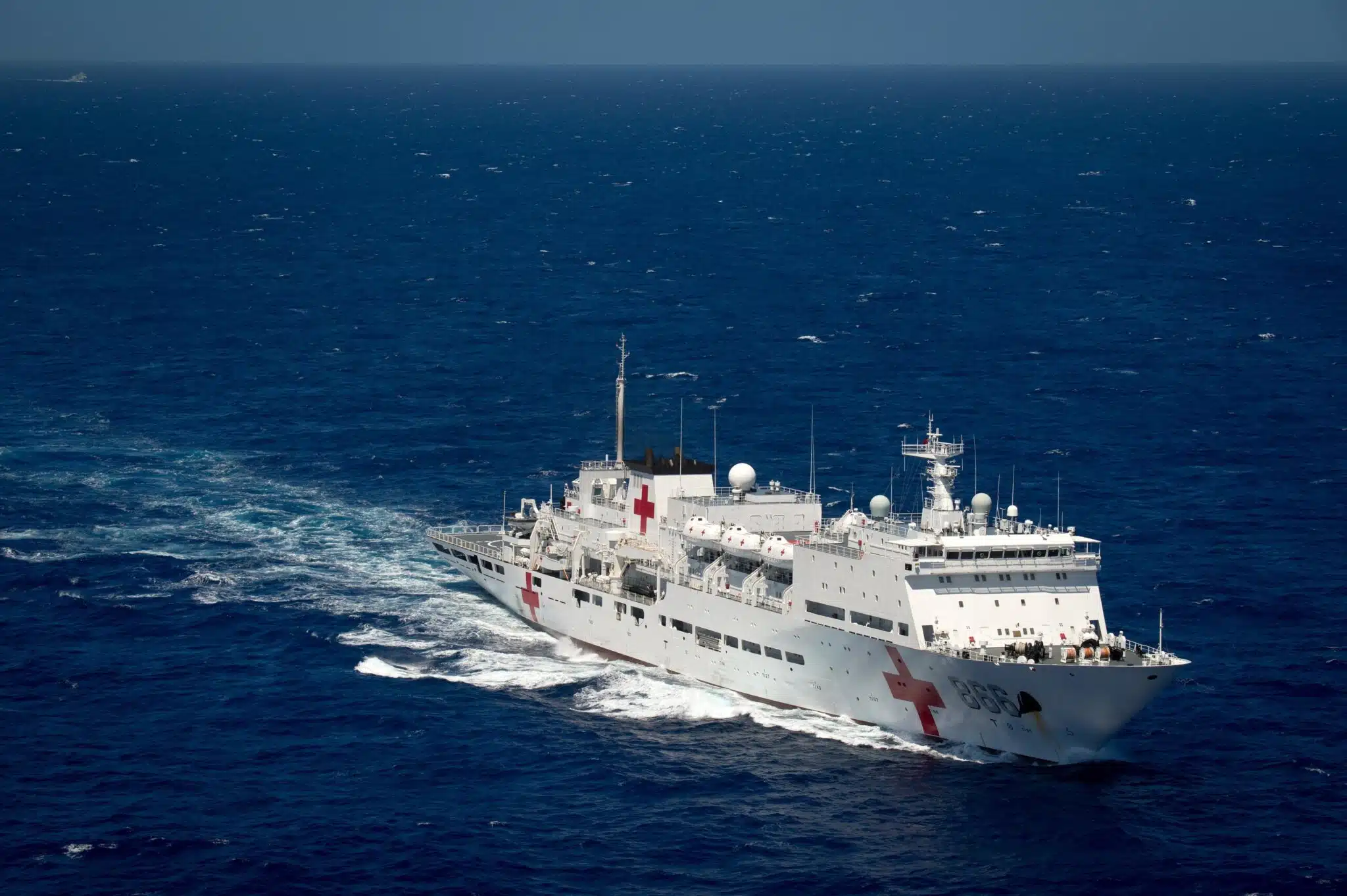

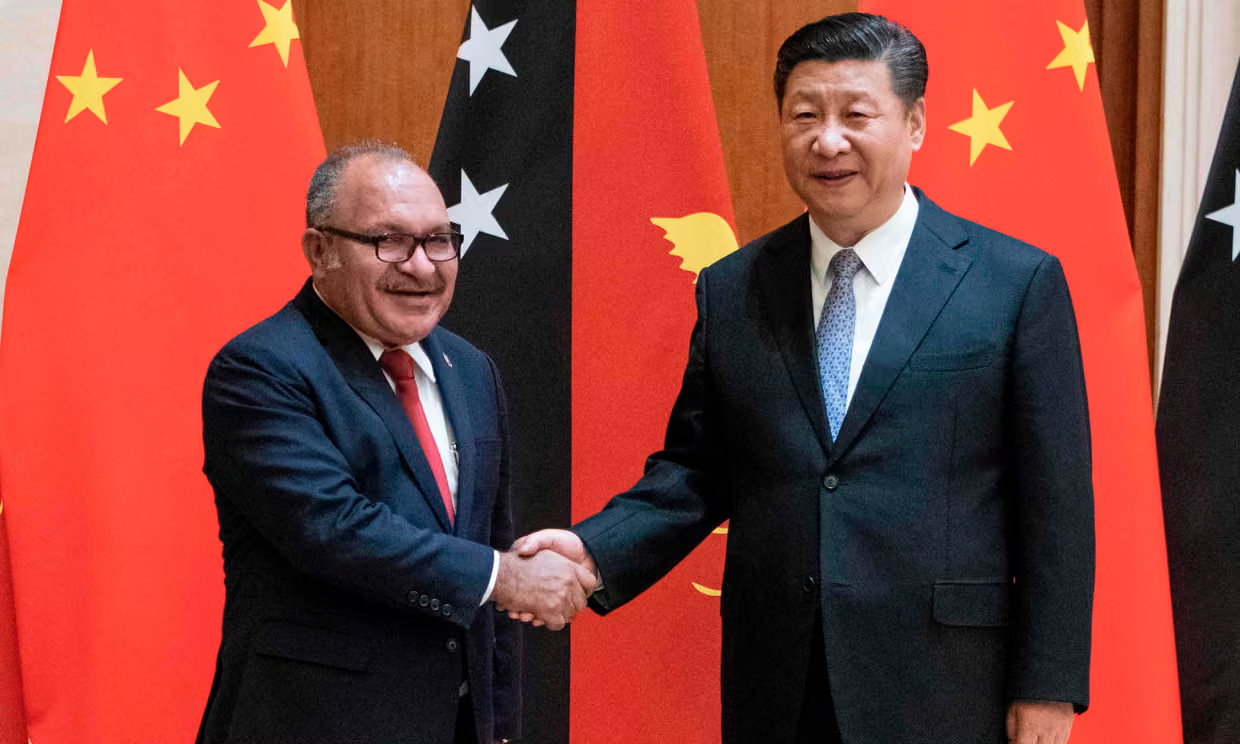
Chinese-funded infrastructure has delivered tangible benefits across the region. Roads, ports, government buildings, and public facilities have contributed to economic development and improved public services. However, concerns persist regarding debt accumulation, transparency, and long-term strategic implications.
The Lowy Institute's Pacific Aid Map demonstrates that China has shifted from large-scale lending toward a more sophisticated aid model focused on grants, community projects, and strategically significant infrastructure investments (Lowy Institute, 2025). While this approach may reduce debt concerns, it also reflects China's long-term commitment to expanding influence throughout the region.
Responses from Traditional Partners
Australia remains the Pacific's largest development partner and continues to play a central role in regional affairs. Australia accounts for approximately 43 percent of official development finance flowing into the Pacific region and has maintained substantial investment despite reductions among other Western donors (Lowy Institute, 2025).
Australia's Pacific Step-Up seeks to strengthen relationships through infrastructure financing, labor mobility programs, defense cooperation, and diplomatic engagement. Australian policymakers increasingly recognize that regional stability depends on addressing Pacific priorities, including climate resilience, economic development, and maritime security.
The United States has similarly expanded its Pacific engagement. Congressional Research Service reports indicate that Washington increasingly views Pacific Island countries as essential partners for maintaining stability throughout the Indo-Pacific. Renewed diplomatic initiatives, maritime security programs, and infrastructure investments reflect growing recognition of the region's strategic importance.
New Zealand continues to emphasize partnership, regional cooperation, and Pacific-led development. Thakur (1993) argued that New Zealand's interests in the Pacific stem from geographic proximity, cultural ties, economic relationships, and shared environmental concerns. These factors remain central to New Zealand's contemporary Pacific policy.
Pacific Agency and Strategic Competition
A common misconception is that Pacific Island countries are passive participants in geopolitical competition. In reality, many governments have actively leveraged rivalries among major powers to secure development financing, infrastructure investments, and diplomatic support.
Keen and Tidwell (2024) argue that Pacific governments increasingly use geopolitical competition to maximize development opportunities while preserving strategic autonomy. Rather than aligning exclusively with any external actor, many Pacific states engage multiple partners simultaneously.
The Blue Pacific framework reflects this approach by emphasizing collective regional identity, sovereignty, and cooperation. The framework seeks to ensure that Pacific voices shape regional priorities rather than allowing external actors to dictate agendas (PIFS, 2022).
However, maintaining strategic autonomy becomes increasingly difficult as competition intensifies. Small states often possess limited negotiating capacity relative to major powers. Consequently, stronger regional institutions are necessary to support collective bargaining and protect sovereignty.
Policy Recommendations
Recommendation 1: Establish a Pacific Regional Framework for Foreign Security and Strategic Infrastructure Agreements
The most important policy recommendation is the creation of a Pacific-led regional framework governing foreign security agreements and strategically significant infrastructure projects. Currently, major security agreements and infrastructure investments are often negotiated bilaterally between individual Pacific governments and external powers. While sovereign governments retain the right to pursue their own foreign policies, bilateral arrangements can create regional consequences that extend beyond national borders. Security agreements involving foreign military personnel, police cooperation, port facilities, telecommunications infrastructure, or dual-use facilities have implications for regional stability and collective security.
The Pacific Islands Forum should establish a voluntary consultation mechanism requiring member states to discuss significant foreign security agreements before implementation. The purpose would not be to restrict national sovereignty but to encourage transparency, information sharing, and regional coordination.
In addition, the Forum should develop regional standards governing foreign investments in critical infrastructure sectors. These standards should include transparency requirements, environmental assessments, debt sustainability evaluations, and public disclosure provisions.
Such a framework would strengthen collective bargaining power by enabling Pacific governments to negotiate with external powers from a position of greater unity. It would also reduce opportunities for external actors to exploit divisions among Pacific states.
Most importantly, a regional framework would reinforce Pacific agency by ensuring that strategic decisions align with regional priorities rather than external geopolitical objectives. By strengthening institutional coordination, Pacific governments can maintain sovereignty while benefiting from foreign investment and security partnerships.
Recommendation 2: Strengthen Collective Maritime Security Cooperation
A second policy recommendation is expanding collective maritime security cooperation throughout the Pacific.
Pacific Island countries collectively manage some of the world's largest Exclusive Economic Zones (EEZs), yet many lack the resources necessary to effectively monitor and protect their maritime domains. Illegal, unreported, and unregulated fishing, transnational crime, drug trafficking, human trafficking, and maritime environmental degradation represent significant challenges.
Rather than focusing exclusively on military competition, Pacific governments should prioritize practical maritime security cooperation that addresses these threats. This includes expanding maritime domain awareness systems, information sharing mechanisms, joint patrol operations, and coast guard training programs.
Australia, New Zealand, the United States, France, and Japan can provide valuable technical assistance, surveillance capabilities, training, and logistical support. However, Pacific governments should retain leadership over regional security initiatives to ensure that cooperation reflects local priorities.
Maritime security cooperation also supports broader economic objectives. Fisheries resources contribute significantly to government revenues and food security throughout the Pacific. Improved maritime governance therefore strengthens both economic development and national security.
Furthermore, enhanced maritime cooperation improves disaster response capabilities. Climate-related disasters increasingly threaten Pacific communities, making regional coordination essential for effective humanitarian assistance and emergency response operations.
By focusing on practical security challenges rather than geopolitical rivalry, Pacific governments can strengthen resilience while avoiding entanglement in major-power competition.
Conclusion
The South Pacific has become an increasingly important arena of geopolitical competition as China, the United States, Australia, and New Zealand seek to expand their influence throughout the region. While this competition creates opportunities for development, infrastructure investment, and security cooperation, it also presents challenges related to sovereignty, governance, and strategic dependence.
Pacific Island countries should not be forced to choose between competing powers. Instead, they should pursue a Pacific-led strategy that strengthens regional governance while expanding practical security cooperation. Establishing a regional framework for foreign security agreements and strategic infrastructure projects would enhance transparency, collective bargaining power, and sovereignty. Simultaneously, strengthening maritime security cooperation would address pressing regional challenges while preserving Pacific leadership.
Ultimately, the future of the Pacific should be determined by Pacific peoples themselves. By strengthening regional institutions and maintaining strategic autonomy, Pacific Island countries can benefit from geopolitical competition without sacrificing sovereignty or regional stability.
References
Australian Strategic Policy Institute. (2024). Australia's role in supporting national security in the Pacific.
Bilney, G. (1994). Australia's relations with the South Pacific: Challenge and change. Australian Development Studies Network.
Congressional Research Service. (2025). U.S. engagement in the Pacific Islands. Congressional Research Service.
Council on Foreign Relations. (2026). China in the Indo-Pacific.
Keen, M., & Tidwell, A. (2024). Geopolitics in the Pacific Islands: Playing for advantage. Lowy Institute.
Lowy Institute. (2025). Pacific aid map: 2025 key findings report. Lowy Institute.
Pacific Islands Forum Secretariat. (2022). 2050 strategy for the Blue Pacific continent. Pacific Islands Forum Secretariat.
Przygoda, M. (2021). The role and importance of Australia in the South Pacific region. International Journal of Operations Management, 1(3), 38–46.
Thakur, R. (1993). New Zealand and the South Pacific. The Contemporary Pacific, 5(1), 75–102.
The Conversation. (2024). China's increasing political influence in the South Pacific has sparked an international response.
U.S.-China Economic and Security Review Commission. (2025). Small islands, big stakes: China's playbook in the Pacific Islands. In 2025 annual report to Congress.
U.S. Department of State. (2024). The United States' commitment to maritime security in the Indo-Pacific.
Australian Institute of International Affairs. (2024). Navigating the tides of geopolitical rivalries: Challenging times for Pacific Islands.
Heritage Foundation. (2024). American Samoa: America's strategic hub in the South Pacific.

Comments